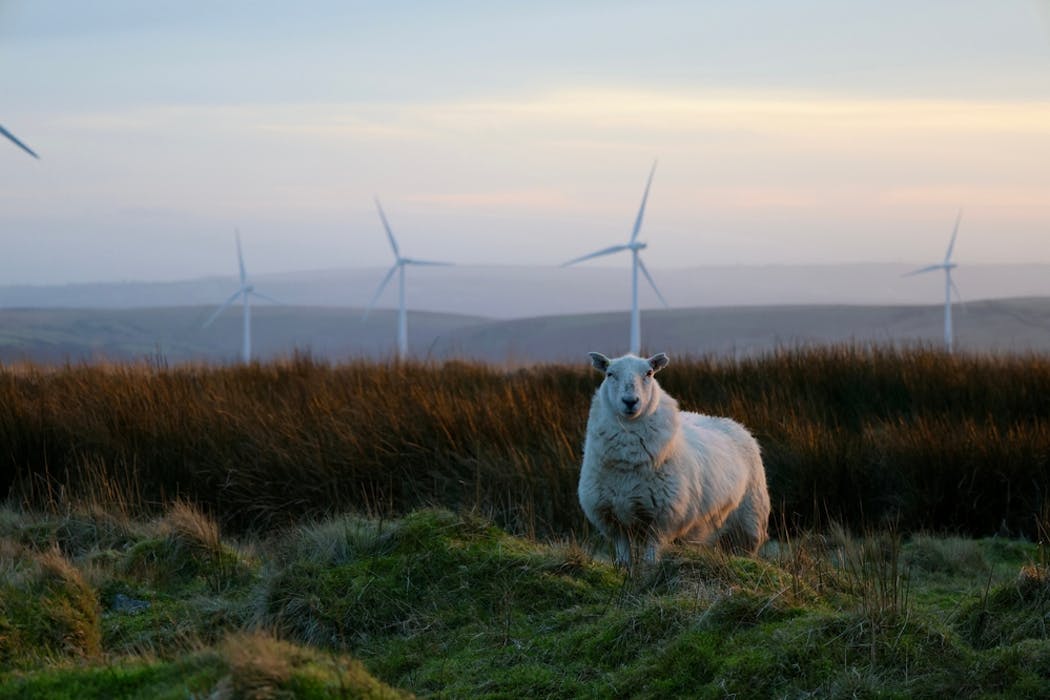
When wind turbines rise above a Welsh hillside, who should benefit financially? Plaid Cymru’s Rhun ap Iorwerth believes it should be local communities.
In a recent speech, the leader of the party that is currently heading the polls for the upcoming Welsh election said he would require renewable energy projects over 10 megawatts to offer communities 15%-to-25% ownership stakes, or other benefits.
Ap Iorwerth also said if his party won the upcoming election, they would create a national energy body to develop renewables at scale, with the aim of keeping more profits in Wales and advancing a “just green transition”.
The proposal responds to a familiar grievance: that Welsh natural resources generate wealth which leaves the region, while local communities live with the infrastructure and gain little in return.
Yet the details of how this would work remain unclear. Who buys the shares? Who can afford them? And how do financial returns translate into wider community benefit?
There are lessons for Plaid from how similar initiative work elsewhere. Several countries already use financial participation schemes that allow communities to invest in local renewable energy projects. In Denmark, for instance, developers must offer at least 20% ownership of new wind projects to nearby residents.
Nepal has adopted a related model for hydropower projects. People living in nearby areas are typically offered shares in a new project. Like any equity investment, these shares can generate dividends once the power plant becomes operational and profitable. In practice, payouts often arrive several years after construction begins and returns vary widely across projects.
In my recent research on the huge Arun III hydropower project in Nepal, I explored how opening up shares to local people contributed to shifting local debates around a once highly contested scheme.
From protest to negotiation
The project to build a 70m high, 466m wide concrete gravity dam across the Arun river stalled in the 1990s after intense opposition to what critics saw as externally imposed, foreign-led development. Decades later, developers offered around 1.6 billion Nepalese rupees (£9 million) in shares to local communities.
Based on interviews with civil servants, project developers and residents, I found this changed the political conversation. Opposition did not disappear, but debates shifted from outright rejection to negotiation over how water, land and energy should generate long-term local benefit.
Shareholding changed how communities engaged with the project. Residents invoked their status as shareholders when seeking roads, schools and improved compensation. Ownership did not eliminate disputes, but it shifted expectations about accountability.
Wales faces lower stakes. Resistance to onshore renewables often centres on fairness and profits not being shared. Community ownership can help address this – if it is meaningful rather than symbolic.
The percentage is less important than the design, according to my research. Nepal mandates around 8%-to-10% local shareholding in large hydropower projects, and the policy has proven immensely popular. Across 17 listed schemes, it raised more than US$10 million (£7.4 million) and was oversubscribed many times over.
Yet strong demand masked deeper inequalities. In 2019, a review by the International Finance Corporation, a global development institution that is part of the World Bank Group, found some households borrowed at interest rates of 18%-to-20% from microfinance institutions (and even higher from informal lenders), or sold livestock and jewellery to buy shares.
Dividends typically arrived three-to-five years after construction began. So, share ownership came down to who could afford to participate and wait for dividends.
For Wales, the key question is how participation is structured. Will shares be affordable? Will returns flow to individuals, collective funds or both? Will vulnerable households be protected from financial risk?
Wales starts from a stronger position than Nepal did. Nearly 60 community energy groups already operate successfully through the not-for-profit Community Energy Wales, with elected boards, annual general meetings and transparent reporting as standard practice. Platforms such as Ethex, an ethical investment platform that lists share offers, allow relatively low-cost entry.
Plaid’s proposal would extend these principles beyond small, voluntary schemes into commercially developed renewable energy projects, embedding community ownership within more formal policy.
Ownership changes expectations
The most important lesson from Nepal is not that local shareholding gives communities control over infrastructure projects – it usually does not. Rather, it can reshape expectations about how communities relate to these projects.
In interviews for my research on Arun III, residents described how share offers changed the tone of the debate. Some referred to their status as shareholders when raising concerns about project benefits, timelines or local infrastructure.
Individual holdings were small and did not confer formal decision-making power. But they changed how residents justified requests for local benefits and accountability.
Debate over renewable energy projects often peaks during the planning stage, when communities can object before decisions are finalised. Once approval is granted, local influence typically narrows to compensation or community benefit arrangements.
Financial participation schemes aim to extend engagement by linking communities to a project’s economic outcomes. Research shows that public acceptance of renewable energy projects depends strongly on how they are designed – and in particular, whether communities have influence over decisions and share in the financial benefits.
But expectations must be managed, and local trust is important. In Nepal, dividend payments were often delayed for several years. Early enthusiasm faded when returns did not materialise as expected. Ownership works only when expectations are realistic and governance is clear.
Why look to Nepal from Wales?
These projects differ in scale, governance and impact. Yet all involve resource-rich regions grappling with energy security, economic transition and questions of distributive justice.
Infrastructure projects are rarely simply accepted or rejected. In practice, they are worked through and contested over time. Community ownership can move debates beyond simple for-or-against positions – but only when schemes are carefully designed and inclusive.
The challenge for Plaid is not only to set a bold ownership plan, but to define how it will work. If done well, community ownership could anchor renewable expansion in local belief and acceptance. If done poorly, it risks undermining public trust.

Udisha Saklani received funding from the UK Research and Innovation Economic and Social Research Council (ESRC) under grant number ES/P011373/1, as part of the Global Challenges Research Fund. She also acknowledges support from the Margaret Anstee Studentship awarded by Newnham College, University of Cambridge.